
The amazing diksha (initiation) of mahaguru ghanda baba
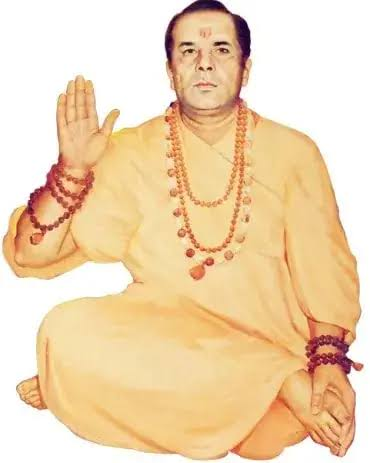
You may remember the yogi Ghanda Baba (1853 – 1937), who appeared on the Autobiography of a Yogi, by Yogananda Paramhansa. His initition story is connected to this secret Ashram found in Shambala or fifth dimension over the Himalayas. He was born into a pious but humble Bengali family from the Bandul district, from a very young age he always showed tremendous interest in spirituality.
One day, in about 1866 A.D. or so, when Bholanath was about 13 years old, he was coming down the steps from the roof of his house. Accidentally he stepped upon the dog sitting at the foot of the stairs. The dog instantly bit him. It was a mad dog and its poison soon spread throughout the body causing excruciating pain. The pain became intolerable so much so that Bholanath started crying, his body twisting, turning and smarting. No treatment proved to be of any avail and finally everybody lost hope of Bholanath’s life. Hindus believe that if one breathes his last on the bank of the pious river Ganga or in its stream, he gets salvation. Accordingly Bholanath, having despaired of his life, one evening started treading towards the bank of the Ganga (Gangaghat) with a view to put an end to his life there, as his end now seemed certain.
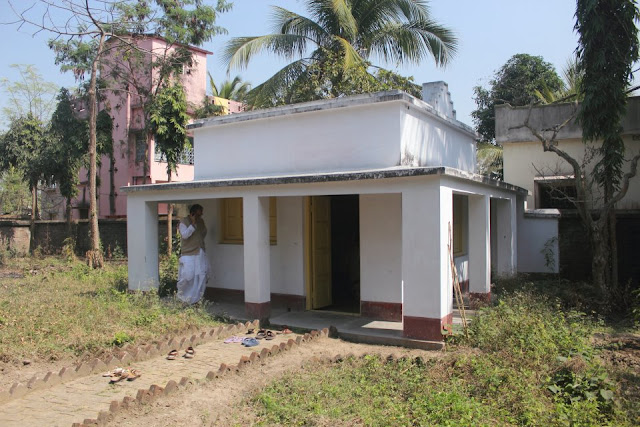
how it happened
But the Almighty had some other plans for Bholanath. On reaching the bank he saw a Sannyasi taking his bath in the river Ganga. He was struck with wonder to see that a column of water would rise up when the Sanyasi would emerge from the water and would go down with his dip under the water and curiously the phenomenon was repeated with every dip. The Sanyasi spotted Bholanath and called out to him in a deep sweet voice saying, “My dear child, why are you so upset with the excrutiating pain? Do you really want to drown at the river? Just wait a minute. I will cure you of this in no time.” And so saying, he got out of the water and came to the boy on the bank and placed his hand on the boy’s head. Bholanath felt as if a slab of ice had been placed on his burning head. He experienced great relief, all the unbearable pain vanished and hope of life revived in him once again. Thereafter the Sanyasi pulled out a herb from the shrubs on the bank and gave it to Bholanath to chew and told him that the whole poison of the mad-dog-bite will be now expelled from his body with his urine and he will become perfectly fit and healthy once again. He also assured him of a long life and told him that he will, in due course of time, become a famous Yogi. Thereafter he told him to return home.
Bholanath felt great reverence and gratefulnesss towards the Sanyasi. The thought of taking initiation from the Sanyasi and living with him, the one who had bestowed a new life on him, came to his mind. Apprehensively, Bholanath expressed his intense desire before his reverent mother. Surprisingly the mother gave him permission to go with the Sanyasi. The Sanyasi taught one Yogasan (yogic posture) to Bholanath and gave him a bij-mantra. He also told him that he was not his Guru. For the present he should stay at home, practice the asan and mantra. These will purify his mind and body. In due time, he shall come and take him to his Guru.
By and by two years passed yet there was no trace of the Sanyasi. Bholanath used to visit a shop in Burdwan market for purchasing day-to-day requirements. One day he heard a story about a strange Sanyasi and this revived his old memory. He longed to go and see the Sanyasi and he obtained his mother’s permission and went to Bandul with his friend Haripada. On reaching their destination they met the Sanyasi in the morning. Bholanath reverently made obeisance and his friend Haripada did the same. Bholanath requested the Sanyasi to take him along with him this time as promised earlier. On enquiry Bholanath explained to the Sanyasi that Haripada was an intimate friend of his and he too was very earnest to stay with and under the guidance of the Sanyasi who was no other than the great Siddha Yogi Swami Nimanand Paramahansa of the secret Gyanganj Yogashram in Tibet, who was Bengali, just like them. He asked them both to come to him in the evening. It is only through the Almighty’s extreme grace and compassion that one out of a million succeed in their goal of self-realization which these two youths, Bholanath and Haripada, set for themselves that day.
All set for the great journey to Gyanganj, the Sanyasi asked them to confirm if they were still keen to accompany him which they did without the slightest hesitation. He once again emphatically reiterated to them all the pit-falls, difficulties and sufferings likely to be encountered on the way. Thereupon, Swami Nimanand tied cloth bandages on the eyes of each so that they could not see anything. Holding one on either side by each hand, he let them over forested hills and plains by air route. The two felt as if they were walking on a smooth silken carpet. By morning the first lap of the journey was covered. Their bandages were removed and they found themselves on top of a barren hillock on which stood a grand temple, surrounded by hill ranges on all its four sides. They realized that they had reached some place far away from Bengal. On enquiry they found that they were at the temple of Vindhya-Vasini Ahsta-Bhuja Devi in Vindhyachal town in the district of Mirzapur in Uttar Pradesh state of India.
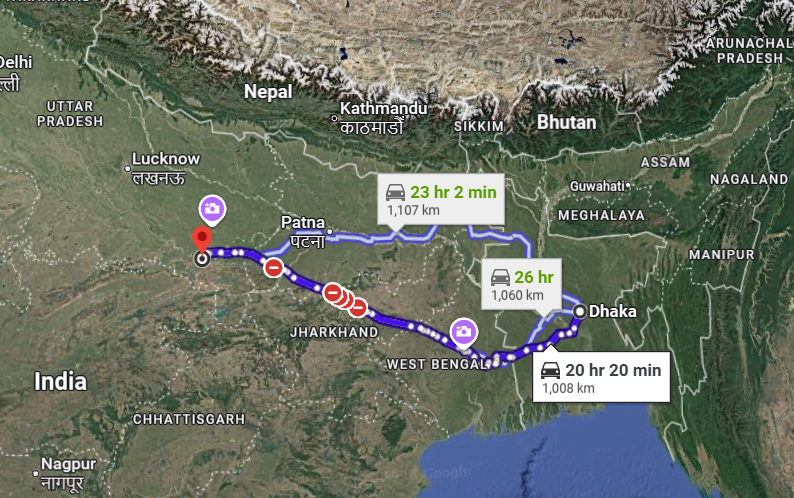
From Dhaka in East Bengal they had thus traversed the states of West Bengal and Bihar and a part of Uttar Pradesh – a stretch of about a thousand kilometres – during the course of a single night. This occurrence enhanced their esteem and respect for Swami Nimanand many fold. The Sanyasi then asked the two boys to stay there free from fear as no wild beast would harm them and not to lose heart till his return to take them on to the Ashram. So saying he suddenly vanished before their very eyes.
A week passed before the Sanyasi arrived again to take them. He disclosed his name to them as Swami Nimananda Paramahansa. As before, he tied bandages over their eyes and took them both with him to an Ashram situated amongst a cluster of hills about twenty kilometres away from Vindyachal, where some saints were residing.
While his stay in Vrindachal, young Bholanath started to cry. Suddenly he saw a ball of light emerging from the sky.
Vishuddhananda ji (young Bholanath) was taken care by Uma Bhairavi, the divine mother. She provided Bholanath with food and told him: “DON’T WORRY BOY, I AM ALWAYS WITH YOU.”
The sanyasin left the two children at this Ashram and himself went away to some other place. He returned after another five days and this time took the children with him by the air route. On reaching the destination the bandages were taken off their eyes. They found that it was morning and they had reached a charming celestial place on a plain surrounded on allsides by snow-covere high hill ranges, calm, majestic and peaceful.
arrival at gyanganj
On enquiry, they were told by Swami Nimanand, “This is the normally inaccessible and secret Yogashram situated in the midst of the mid-asian highlands, Tibet, known by the name of Gyanganj Yogashram. After a stay of nine to ten days at the Ashram, Bholanath and Haripada were both presented by Swami Nimanand before His Reverent Holiness Shri Mahatapa, for initiation. Shri Mahatapa first transmitted spiritual energy into each one of them by placing his hand on their heads and thereafter gave Bij-mantra to each of them. Both of them thus became Guru Bhais of Swami Nimanand, who was an earlier disciple of Mahatapa Maharaj.
This happened at the Rajrajeshwari Hermitage of Padmavati Goddess. This was done by the command of Paramhans Bhriguraj. Later, in Gyanganj, Paramhans Shyamanand initiated him into Natural Science, and Bholanath learned many new sciences, processes, and discoveries.
According to the rules of Gyanganj, Bholanath had to spend twelve years as a celibate, two years as a Sannyasi, and afterward some time as a pilgrim. During that period, he sometimes returned to his home through intuition to see his mother.
After the completion of his spiritual training, Bholanath was tested through the Shivling located in the Lotus Chakra of Paramhans Bhriguraj. Every Yogi of Gyanganj had to pass this final test. During the test, the Shivling had to be removed from the head of Paramhans Bhriguraj and then placed back in its original position. Bholanath succeeded, and Paramhans Bhriguraj gracefully handed the Shivling over to him.
On that occasion, Bholanath was given the new name Vishuddhanand, replacing his previous name, Bholanath. Afterward, his master ordered him to return to the physical world, marry, and live a righteous life as a householder, saying that this would confer the perfection of life. Vishuddhanand was sorrowful at the thought of leaving the divine life of Gyanganj, but he could not disobey his master.
At first, many Yogis of the Ashram opposed the decision to give him the Siddha-Shivling as a gift. But when they saw the strong insistence of his master, they agreed. Vishuddhanand then returned to his motherland, Gushkara, in the Vardhaman/Burdwan district of West Bengal. There, as directed by his master, he spent some time in household life and enshrined the Shivling given by his Guru, naming it Bholanatheshwar. After the departure of his wife, he entered the position of a Paramhans.
It was later said that extraordinary events often occurred around Vishuddhanandji. Discussions with him could last for hours. He was said to have hundreds of crystal balls within his body, which he could take out without bleeding. He was also said to take out a Shaligram from above his head. On such occasions, devotees became deeply grateful and awe-inspired by seeing such holy objects.
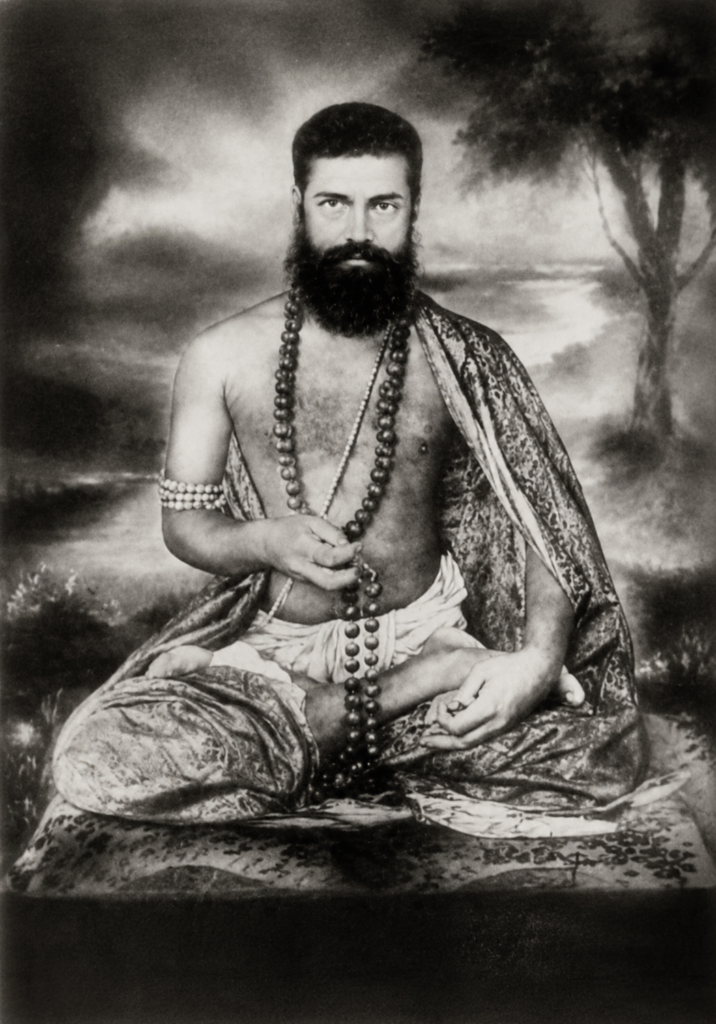
The Gyanganj Diksha system itself was also considered unique. The Yogis of Gyanganj had developed a special initiation method after long research. In this system, the Guru selected the most appropriate mantra for the disciple according to the disciple’s spiritual performance and attainment over three to seven past births. The Guru discovered the correct mantra through meditation and spiritual power.
After the mantra was selected, it was tested by chanting it over a bell-metal bowl filled with nearly half a litre of ghee. If the ghee melted and fumes rose from it, the mantra was considered correct. Then the disciple was called into a closed room, where a special seat was prepared with three layers: kusha grass, carpet, and silk cloth. The actual mantra-giving ceremony between Guru and disciple was kept strictly confidential.
After the initiation, Kumari Seva was performed, in which a young girl was worshipped and fed as a representation of the Divine Mother. The ghee from the bowl was used to prepare sacred food such as poori and halwa, and the bowl was handed over.
The discipline of Gyanganj also included food restrictions. Onion, garlic, eggs, and meat were forbidden, except in the case of Prasadi. Fish, however, was allowed. (note: in reality they eat only fish and other stuff of that sort only as prasad or offering, the truth is that most of them eat very little or drink juice or vegetarian food once a day, the most advanced do not eat anything at all)
This discipline was considered necessary for the effectiveness of spiritual practice, just as medicine works properly only when a patient follows the prescribed diet.
To become a Guru in the Gyanganj Diksha system was considered extremely difficult. Only spiritualists of very high attainment could become Gurus or Masters in that system. Any deviation from the prescribed practices was considered resultless and punishable.
etymology, location and physical description, founder and how to access it
Gyanjani is the composite of two words – gyan, meaning knowledge in Sanskrit, ganj, from Old Persian and Sanskrit, meaning treasury of all kinds of jewels, therefore, Gyanganj is the “treasury or abode of all knowledge or sciences”. This ashram is ancient monstery that is located in the Northwest zone of the Himalayan plateau, beyond Kailash-Mansrovar. The ashram is inaccessible through maps or exploration and it is concealed beyond ordinary human perception. Only advanced siddhas knowleadgable in Suryam Vijiam “solar science”, can access the Siddhasram (One of many names of Gyanganj). . Therefore, one must be admitted to enter the monastery, and a person that is uninvitited could never find it or enter it, except by accident or providence. The monastery has one particularity, it is mult-dimensional, that means that it is located both here on Earth and on a plane beyond the physical, which may be called the fifth dimensional, to access it, then, is only possible to advanced yogis, which are able to transverse the “hyperspace”, that is, the bridge between the crude 3rd dimension and the 5th dimension.
Vishuddhananda ji said the route to Gyangangj starts from Jalandar, vehicles are available from Jalandhar to Goga.
After that you have to walk. It takes about two months. Sometimes there is chatti (resting place), where chira (flattened rice flakes) and curd are available.
There is ice on the way — in some places the feet sink into the soft ice like a step.
Although everyone is allowed to enter the ashram, no outsiders are allowed to stay.
Gyanganj exists on three planes, physical, divine and spiritual. And the enlightened souls too exist on three levels – Causal, Greater Causal and Ultra Spiritual. They possess the ability to easily transcend all the three levels, and those Ultra Spiritual ones living in their causal body, have the power to appear in their physical body too.
– There are three levels here. The lowest is the Yogashram, above it lies the Raj-Rajeshwari Monastery, and the highest — still beyond human perception — is the seat of Srimat Mahatapa. 1. Practical / Visible Gyanganj (Physical Level)
- The earthly, visible ashram in the Himalayas (above 21,000 ft, beyond Kailash in Tibet).
- How to Enter: Only with a perfected yogic body. The atmosphere is too subtle for ordinary people. Entry is opened by a perfected master (e.g., touching a stone wall to reveal a tunnel). One must first attain Siddhi to receive the call.
2. Raj-Rajeshwari Monastery (Middle Level)
- Higher plane above the Yogashram, also called Lakkarmundi Mai’s Cave.
- How to Enter: Through inner paths of Gyanganj after progressing from the lowest level. Accessible to advanced perfected yogis and Atisiddhas.
3. Seat of Srimat Mahatapa (Highest Level)
How to Enter: Only by the most advanced luminous Atisiddhas. It is part of the transcendental realm.
The supreme level, still beyond ordinary human perception.
Gyanganj exists on a different level, a higher dimension. But, yes, on a gross level it has a location parallel in known places on earth. Yes such a place do exist, camouflaged and in seclusion, and is accessible to only siddhas. It is not heaven on earth, but a mystical kingdom that guards the most sacred and ancient teachings of the world, including the Kalachakra (Wheel of Time).
As per Yogic point of view, Gyan ganj has three levels.
1st level is the area up to Mahabhav, which is Gurudham.(Abode of Guru). This is the goal of Khand Yogis. If one loses one’s physical frame before realizing it then some allied realm is granted. In physical body, work can be accomplished at greater speed than in subtle body.
The 2nd level is beyond Mahabhav and is located above realm of Sun. Mahakhand Yogi after completing their Kriya realize this space. If this state is not achieved in body then one has to continue sadhana to attain it living in Gyan ganj itself.
For 3rd state it is not easy to say anything. One can say, that in this the goal is Vishvaguru, teacher of the world and its area of operation is whole cosmos.
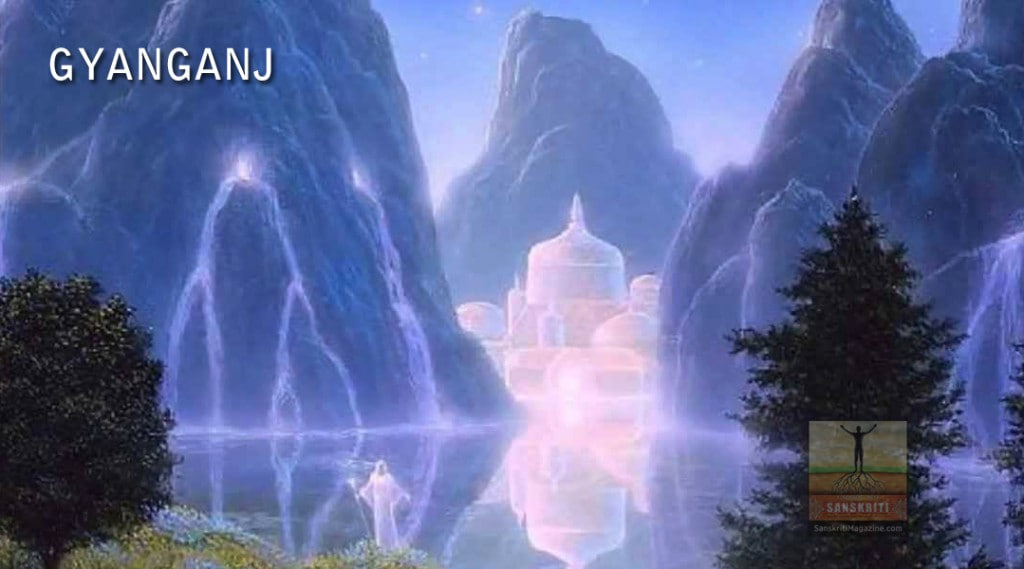
It covers an area of eight square miles or a perimeter sixteen kilometers and is surrounded by a lake (or moat) with crystal clear water. There is a bow-shaped drawbridge, which links Gyanganj to our world. The Gyanganj end of this bridge has a gadget to lift the bridge when desired. This gadget is operated by Surya Vigyan. GYANGANJ has a full moon night with clear sky every day. Temperature is optimum and soothing throughout the year.
This area has beautiful waterfalls culminating into a pure and divine lake known as “Siddhayoga Lake” which has very advanced therapeutic properties. Many hundred varieties of beautiful flowers keep blooming all year around in this area along with variety of delicious fruit trees. The immortal “Kalpa Vriksha” (the tree of immortality) exists in this place, where one can fulfill all his heartfelt desires just with wishful thinking. The fruit of this “Kalpa Vriksha” resembles the shape of abstract form of “Shri Yantra” ( Shri Yantra means an instrument of geometric form) and nobody is allowed to take them out of this Siddhashram area. One such herb, Sanjivani, is said to have healing properties that can revive ailing beings and is preserved only within Gaynganj.These healers use Aushadhis, rare plants that treat ailments ranging from physical injuries to spiritual imbalances. Brahmakamal, a unique flower found only in high altitudes, is said to purify the mind and spirit, while Himalayan Nettle is used for pain relief and physical rejuvenation.Offerings are made to the Soma Vine, believed to be the source of divine nectar, and to the Naga Lotus, a flower associated with wisdom and enlightenment.
Gyaganj has their fauna and extinct protected animals not found on Earth. The Yeti, so-called evil being, is actually positive being according to Tibetan folklore, this multi-dimensional being protects Shambala and helps their inhabitants.
Other mystical animals, like the Shaligrama Tiger, a rare white tiger with stone-like scales, and the Garuda Hawks, giant birds that are said to watch over the skies, add to the biodiversity of Gyanganj. Each of these creatures plays a role in maintaining Gaynganj’s ecosystem, symbolizing the balance of life. These animals are seen as manifestations of divine forces, and it is believed that their presence strengthens Gyanganj’s connection to other realms.
In Tibetan Buddhist and Shambhala tradition, the four protectors of the mythical kingdom are the Four Dignities (sometimes called the Four Auspicious Ones). These mythical animals guard the four cardinal directions and symbolize the stages of enlightenment: [1, 2, 3, 4]
- Snow Lion (East): Represents unconditional fearlessness, youthfulness, a mind free of doubt, and the earth element.
- Tiger (South): Represents unconditional confidence, relaxed yet disciplined awareness, kindness, and modesty.
- Garuda (West/North): A fierce, eagle-like mythical bird symbolizing wisdom, freedom from hopes and fears, and the fire element.
- Dragon (North/West): Thunders in the sky, symbolizing the sound of compassion that awakens us from delusion and increases knowledge. [1]
The area of Gyanganj is also known as “Gyanganj Mandi” or a spiritual market place. It is an area where the inhabitants of Shamballa Valley obtain things required for advanced practices in their respective monasteries. Siddha Vigyan Ashram is a scientific research center of advanced yoga. In this center, sixteen kinds of sciences are taught; the most important being solar sciences, universal planetary sciences, sciences related to time, the science of air, the science related to sun and moon, the science related to space, the science related to gravitational forces etc. All the sciences involve very high understanding of Energy. The level of courses is very advanced and still unknown to our modern day world.
In Yoga Siddha Ashram area, all masters have their own little hermitages containing huts made out of straw where they remain fully absorbed in their state of Samadhi (meditation). The masters of the highest level can only be noticed like a condensed bright light with a body appearance.
The whole Shambala valley is shrouded in milky white light all the time which is neither due to sun nor due to moon. In the area, there are phosphoric plants which can give desired light on a voice command. All the masters of Gyanganj and Siddha Vigyan Ashram, including Shaivite & Shakti Tantriks and Jain & Lama Tantriks, worship the great cosmic mother which is the giver of energy and energy is the basis of existence of every thing; whether it is live or lifeless as each element of our universe deep down is nothing but electrons, protons and neutrons forms of energy.
One such fruit was brought out by one of the great masters after getting permission from Siddhashram Yogis which the author was lucky enough to see and physically touch, in the year 2001 “Kumbh Mela” held at Prayag ( Allahabad, UP, India).
In that land, words and voice are not needed for communication. In Madhyama, Pashyanti and Para levels only intent is enough to communicate. In Gyanganj, if a great man looks at you, you can feel his intent and the message that he wants to convey. Using the computer jargon his intents are instantly decoded and you get to know what he is trying to say. If they speak any language at all, they speak Sanskrit, and there are languages there unknwon to mankind, as we shall present later.
In the past, earth had many civilizations destroyed in course of time due to many climatic changes and natural disasters. The yogis of this sacred area have been instrumental in bringing up the human civilization after each such disaster causing to end and start the “Yuga Cycles”. They watch over all aspects of various religions of this world.
There are five eligibility criteria which are essential for gaining entrance into this Ashram.
1. The aspirant must have awakened his Kundalini upto ‘Sahastrar’ , (thousand petalled lotus inside the brain which is the seat of infinite consciousness).
2. Must have mastered at least two Mahavidyas and also have thorough knowledge of the remaining eight Mahavidyas.
3. Must have acquired the methodical knowledge of Tantra as well as of Mantra.
4. Must be noble, simple and must have totally adopted the Indian culture.
5. Must be the disciple of such a Guru, Yogi, ascetic or person, who himself has entered Siddhashram.
Sai Kaka, a yogi who claims to have visted Gyanganj, says: “On the adhyatmic or spiritual level, it (Gyanganj) runs the universe. On the adhidevik or celestial level, the earth and water elements are absent, enabling powerful activity. At this level, Gyanganj impacts many planes (of existence) and beings. On the adhibhautic or gross level, Gyanganj siddhas guide human beings in spiritual and social fields.”
Suppose a seeker is stuck somewhere in his path, he could be guided in the form of an intuition, or some kriya triggered in his subtle body or his guru is inspired to do the needful.”
Sai Kaka argues from his experience with, and knowledge of, Gyanganj, that all’s well with whatever is going on in human affairs. “Earlier the suffering in the world would make me emotional, would pain me and fill me with compassion. Now I realize that right and wrong, good and bad exist on the relative plane—of mind, intellect and ego—and are an interplay of the three gunas.
From God’s viewpoint, there is nonduality. Creation and dissolution are part of the continual flow.” Though there can be no evolution in a flow, Sai Kaka concedes that Gyanganj is engaged in transforming world consciousness. Maybe with the collective consciousness rising, Gyanganj will become more manifest and easily accessible to human beings.
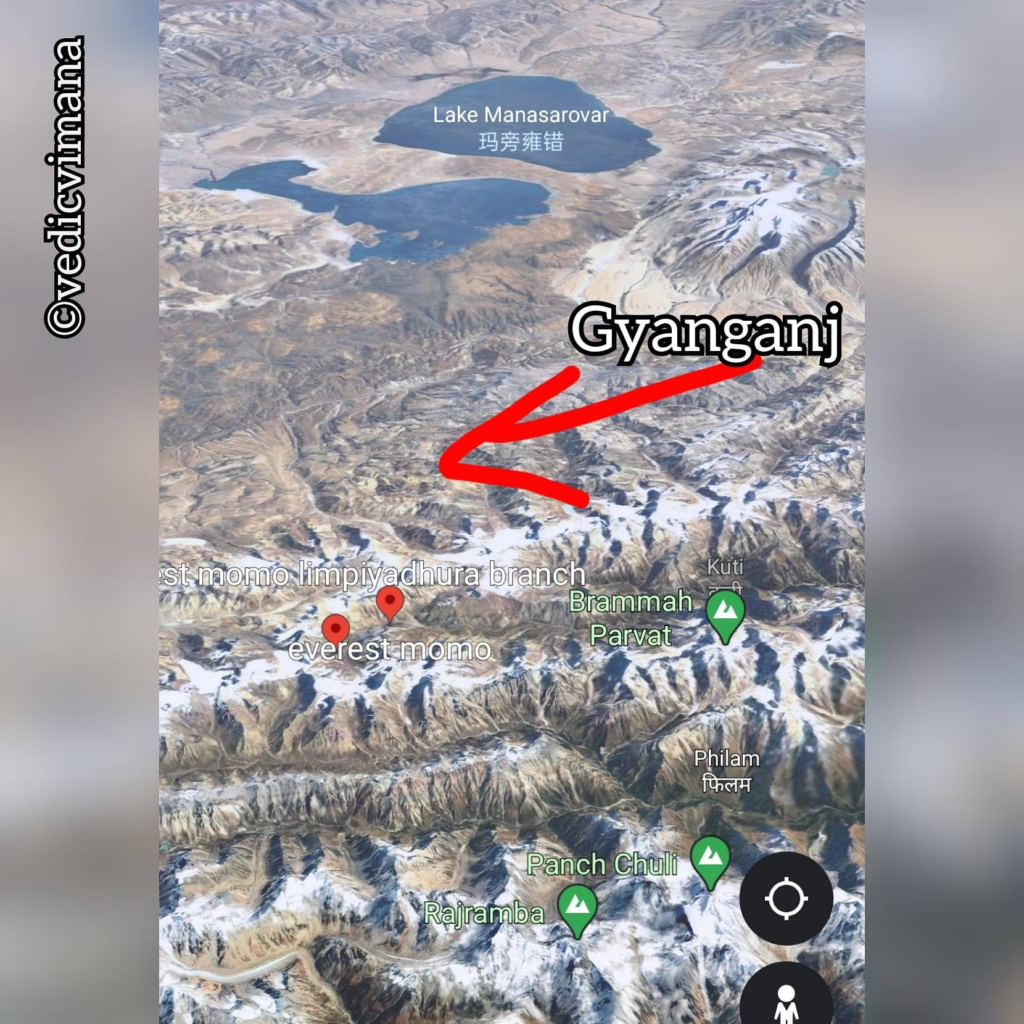
It was on old route to Kailasa Manasa sarovara from Uttarakhand
It is referred to in the Ramayana, Mahabharata and the Puranas. In Valmiki’s Ramayana it is said that Viswamitra has his hermitage in Siddhashrama and it was the erstwhile hermitage of Vishnu, when he appeared as the Vamana Avatar.[2] He takes Rama and Lakshmana to Siddhashrama to exterminate the demons who are disturbing his religious sacrifices.[3] In the Narada Purana (Purva,1.25), Siddhashrama is mentioned as the hermitage of sage Suta.
In India, this secret, sacred land is known as Gyanganj or Siddhashram. References to Gyanganj or secret ashrams can be found in Hindu scriptures such as Valmiki Ramayan and Mahabharat. Guru Nanak called it Sach Khand.
Mandakini’s riverbed is also very mysterious: spiritual giants down the centuries have beheld celestial sights there. Thus, the entire region from Rishikesh to Kailash and Yamunotri to Nandadevi is siddhaland. In Bihar, many Buddhist siddhas frequent the Giridhkoot mountain. The Nilgiris and Srisailam in south India, too, are known to harbor secret ashrams.
An amazing fact is that Gyangangj has a secret society called the Gyangangj Order, which works for the betterment of humanity. It is like the Illuminati, but positive, and composed of super-yogis that have powers and age beyond normal social comprehension.
Gyangangj Order is believed to be accessible only to those who have purified their minds and have a sincere longing for spiritual growth.
Gyangangj is said to be protected by a veil of secrecy, making it nearly impossible for ordinary individuals to stumble upon it.
Foundation of gynganj
Lord Shiva blessed Gyanganj:
It is the city of Kubera, the Lord of Wealth. Lord Shiva instructed Kubera to establish his realm and store all the gold and wealth to the north of Kailash. Many great scholars are there, along with many other things. When Kubera received the blessing from Lord Shiva, the Lord told him not to fear and to expand his household to the north of Kailash, keeping all the gold and wealth there.
The main founder of the Gyangangj ashram is Shri Shri Gnanananda Paramahansa Ji. This place is very old, it is said that its ancient name was “Indrabhavan”. After renovating this ancient place “Indrabhavan” 5600 years ago, Shri Gnanananda Paramahansa took charge of its management and preservation. He is still incharge of Gyangangj ashram.
Sage Vyasa established eight hidden ashrams in the Himalayas, and Gyanganj, or Siddhashram, is one of them. It was made by Deva Sthapati Vishwakarma, the celestial architect. Therefore, we may deduce that Sage Vyasia instructed Vishwakarma to construct the Ashram, and Shri Shri Gnanananda Paramahansa Ji was in charge of it at that time.
Vishwkarma constructed the Ashram according to principles of sacred geometry. Positioned at the earth’s energy nodes.
“Agastya Muni lives there in the southern face of the [Mount Kailash] mountain.”
— Sadhguru Jaggi Vasudev
“Many times, while travelling across the Himalayas alone, I have been taken in as a guest in the ashram of the great revered Agastya dev.”
— Gumnami Baba, writing in Bangla
In India, this secret, sacred land is known as Gyanganj or Siddashram. References to Gyanganj or ashram secrets can be found in Hindu scriptures such as the Ramayana of Valmiki and the Mahabharat. Guru Nanak called it Sach Khand. Even our Upanishad has mention of Gyanganj. Closer to our time, Paramahansa Yogananda, in his celebrated “Autobiography of a Yogi” writes of the encounter with the guru of gurus, Mahavatar Babaji, an immortal of long age who appears increasingly young and still living in the Himalayas. Babaji has also appeared in some other advanced research and is said to be connected with Gyanganj.
When the Pandavas in the Mahabharata inquired about the route to Heaven, Shri Krishna informed them of the Siddhashram. This location also held the nectar that was released from the Samudra Manthan. It is anticipated that the birth of Vishnu ji’s Kalki avatar would occur here.
Dr. Narayan Dutt Shrimali, an astrologer-tantric- guru based in Jodhpur who published Mantra- Tantra Yantra Vigyan, a monthly Hindi, says he did his sadhana in Siddhashram, where his name was Nikhileshwarananda. That’s where he acquired his occult powers. Later his guru in Siddhashram told him they wanted him to return to his family life and help in spreading the wisdom of Siddhashram.
gyanganj devas and devis, and connection to other realms
MATA RAJRAJESWARI is the devi of Gyanganj and she resides in the highest level of the siddhashram GYANGANJ. That is where BRAHMHARISHI MAHATAPA lives.He is the MOST PROFOUND ADEPT IN THE VIDYA OF SRI CAKRA.

The Chiranjeevis, or “Immortals,” are seven legendary beings who were blessed with eternal life by the divine forces. Chosen for their purity of heart, courage, and wisdom, each Chiranjeevi was tasked with a unique responsibility that aligns with their natural abilities and spiritual insights.

Hanuman: Believed to reside in the Gandhamadana mountains, constantly chanting the name of Lord Rama.
Ashwatthama: Condemned to roam dense forests and remote wilderness.
Veda Vyasa: Said to be in deep meditation in Himalayan caves.
King Mahabali: Believed to reside in Patala (the netherworld), with the boon to visit his people in Kerala once a year during Onam.
Vibhishana: Believed to reside in an invisible form of Lanka, guiding humanity toward dharma.
Kripacharya: Said to wander silently across India, guiding deserving seekers and spiritual disciplines.
Parashurama: Believed to be in deep penance on the Mahendra mountains
ALLIENCE WITH OTHER TERRESTRIAL MULTI-DIMENSIONAL REALMS
Gyanganj maintains alliances with ancient and neighboring civilizations, including those from realms like Devlok and Gandharva Loka, as well as lost civilizations such as Lemuria, Atlantis, and ancient Vedic societies. The city maintains strong ties with Atlantis, whose residents fled to hidden underwater realms. Atlantean scholars frequently visit Gyanganj to exchange knowledge, culture, and resources — sharing insights on hydrodynamic technology, water-based energy manipulation, and sustainable underwater ecosystems, while receiving herbal and spiritual knowledge in return.
Apart from Atlantis, Gyanganj is connected to a broader network of underwater cities across Earth’s oceans through the “Aqua Conclave.” These alliances enable the sharing of rare minerals, energy crystals, and healing plants, and allow coordinated defensive strategies between Atlantis’ water-based weaponry and Gyanganj’s earth and air-based defenses.
Lord Mahadeva is also residing in a special scientific place which can be crossed by an special cosmic wheel or something like modern time machine concept (Kaalchakra). Many sages live in the Manas Sarovar along with Gods and Demigods. It is above or top of the Himalayas. The lake consists of miraculous water from which an special Ratha or Golden Chariot arises in a period once in a year.
Neither Kailash nor Manas Sarovar is in the territory of earth that can be seen by humans. It is totally in a secret and sacred place kept managed by the clever sages by announcing other less worthy places as Kailash or Manassarovar for the pilgrim of ordinary folks and keeping them away of the holiness of the place.
The superiors of Gyanganj and other invisible aashrams in the Kailas region lived in a snow-clad cave in the mountains which has a small statue of Mahadevi Rajrajeshwari of Srividya. The book ‘Ghost Land’ also refers to seats of unknown Rishis of divine powers hanging in air and secret gatherings near Mumbai’s Elephenta Cave’s Kailas. The faces of these Rishis are not visible. It shows that there has been a long tradition of keeping the identity of Rishis with divine power anonymous.
historical mentions of gyanganj yogashram
In 1926, Gyanganj has been mentioned in a book written in Gujarati “Bram Brahmada No Ved”. It mentioned that there is a math named “Satya Gyanashram” or “Gyanpith” which is very secret and is situated on top of mountain Himalaya in Tibet.
The book mentioned, after five miles of the ashram all permanent snow-covered area exists. It has been also mentioned that in this ashram, such a high level of wisdom & knowledge is available that no place in the world seems to have.
It is said during the reign of Raja Vikramaditya, three travellers/tourists namely “Siddhapuri,” “Atmapuri,” and “Gyan Puri” after extensive travelling in ‘Brahmadesh’ for some time ultimately reached that place and started residing permanently in that secret place. There, about yoga, “Amritsidhi,” and other theories and practices related to science were discussed.
That place was so secret and inaccessible, that only twelve persons from China, Brahmapradesh & Assam used to know about that place and their activities.
After staying for some time, out of three, two travellers left that math (P-77). Another traveller from Rome also expressed about that place in the name of Gyanmath. He expressed that none could enter in that math without the permission of the authority (P-78).
Another Greek traveller also mentioned about that place. He told that he had never seen such a wonderful and mysterious place elsewhere in the world. As per him, this was the real “Heaven on Earth” (P-78).
A renowned historian from China, namely “Fengliyan,” mentioned that “Yoga Kriyas were being researched for the welfare of the world.” He also apprehended that from that place, in the future, although not very known now, real development for the world would be achieved by those yogis in that ashram. These yogis, whatever they wish is achieved.
A Gujarati volume entitled “Brahmandono Bheda” (The Secrets of the Cosmos) describes about a matha (monastery) named “Satya Gyan Ashram” in the Tibetan region. This place is also reported to be a siddha ashrama. A Greek tourist has mentioned about it in his diary of Himalayan tours. In his words, this is a unique place in the world. A Roman visitor described this matha as an arcane center, where occult knowledge and scientific developments both appear to have excelled significantly. More than 300 years ago, a Chinese scholar named Fengliyan had also written about this siddha ashram. According to him, higher level yoga is practised in this mystic ashram. The yogis of this matha have attained supernormal powers. This siddha asharam in the Himalayas appeared to him as a treasure of the para and apara knowledge. Kayakalpa , cure of dreaded, intractable diseases, instantaneous treatment of a physically handicapped enabling him to become normal and strong, etc – all without any instrument or medication, etc, are among the common supernatural attainments of these siddha yogis as reported by Fengliyan. He further writes that – clairvoyance of the whole world on the ‘screen’ of one’s palm, creation of a stout fort in air, etc are real and easy tasks performed by these siddhas.
– Extra Sensory Potentials Of Mind by Pandit Shriram Sharma Acharya
Another historian mentioned that an unknown protected layer was created in aerospace to prevent from any damage and to enforce safety of “Gyanmath” (P-79).
In part of “Dev Darshan” it was written that a Maharashtrian yogi, namely “Ananta Yogi,” went to Gyanganj as per advice of “Bhagavan Dattatreya” for taking lesson on yoga and stayed there for a number of years.
the amazing story of colonel l.p farrel
In the Himalayan foothills near Nainital, during a royal picnic in 1942, the King of Kumaon hosted British Army officer Mr. L.P. Farrel — a rare Westerner deeply drawn to Indian spirituality, vegetarianism, and yogic mysteries.
That night, as the camp slept, a mysterious voice awakened Farrel, commanding him to vacate the tents because the site was needed for higher purpose. A shadowy figure appeared twice in his tent. Unable to sleep, Farrel felt an irresistible pull and climbed a steep, dangerous northwestern hill at dawn.
Guided by unseen help, after three-and-a-half hours of arduous ascent, he reached a small rocky ledge where an elderly yet radiant Sadhu with a brilliant forehead awaited him. The Sadhu, possessing extraordinary siddhis, knew Farrel’s name and read his thoughts like an open book. With a mere touch, he instantly relieved Farrel’s exhaustion.
The Sadhu explained: He had subtly called a young disciple who was his student in a previous birth. The youth’s sadhana was incomplete, and this sacred spot was required for its continuation. Farrel humbly requested a glimpse of his own past life, but the saint gently declined, saying such powers are not for display.
The group shifted camp. By evening, the young man arrived, drawn by inner inspiration. The Sadhu arrived, performed puja, and through a divine ray of light projected on a tree trunk, revealed the youth’s previous life as a vivid, living cinema. The young man recognized every event with excitement.
Deeply transformed, the youth declared his worldly attachments broken and readiness to resume his unfinished spiritual penance for universal welfare. The Sadhu instructed him to rest and await the right time.
Mr. Farrel, profoundly moved, later shared this extraordinary account in the May 17, 1959 issue of Saptahik Hindustan. The incident deepened his reverence for the hidden, reclusive saints of the Himalayas — those luminous souls whose subtle power far exceeds their frail physical forms.
Thus, in the silent wilderness, the eternal play of karma, guru-disciple bonds across lifetimes, and the call of sadhana unfolded once more.
restoration administration and sciences
The Great Paramahansas of Gyanganj
The main founder, restorer, and preserver of this sacred place is regarded as Shri Shri Gnanananda Paramahansa. After renovating the ancient Indrabhavan 5600 years ago, he took charge of its management and preservation.
Gyanganj is inhabited by thousands of Paramahansas, or immortal Yogis, who remain there for spiritual practices and higher yogic training. These Paramahansas may originally have been born as ordinary human beings, but through immense yogic kriyas, tapasya, and long spiritual discipline, their bodies are said to have gradually transformed into divine and supernatural bodies. The average age of a senior Paramahansa of Gyanganj is around five hundred to six hundred years, while some are described as being much older.
Maharishi Mahatapa, also revered as Babaji and Mahaguru Maharishi Mahatapa, is regarded as the supreme spiritual head of Gyanganj and of the greater hidden Himalayan organization connected with it. His age is around 1500 years old. His body is said to have gone beyond the ordinary needs of food, water, and air. He has transcended the limits of time and space and can travel freely to any loka, or world, according to his will.
This Ashram is under the command of 3 supreme masters; Mahaavtar Kriya Babaji , Langooriya Babaji and Phulheri Babaji.
“There are many compartments in the same ashram: outer caves and inner caves. The outer caves are full of young disciples, and the inner cave is of ancient sages. That place is less visited by outer dwellers.”
“The outer part is managed by a principal-like sage. Maharshi Matanga is the principal.”
“In the inner cave, in a secret place, the body of Maharshi Angira is kept very guarded. He is one of the nine Brahmarishis, the son of Lord Brahma.”
“All of the Indian sages are directed by the holy ancient rishis, directly or indirectly. In other words, they are the eternal directors of the whole existence. That is why they are called Prajapati.”
Maharishi Mahatapa does not usually reside inside Gyanganj Yogashram itself. He generally remains in a cave among the hills of Tibet. Inside that cave is installed an idol of Raj-Rajeshwari Devi, and therefore the cave is known as Raj-Rajeshwari Math. In that region, the Yogis are said to have gone beyond the need for ordinary houses, doors, huts, or worldly shelters. Many monasteries similar to Gyanganj Yogashram are believed to exist in that part of the Himalayas, all under the spiritual jurisdiction of Raj-Rajeshwari Devi.
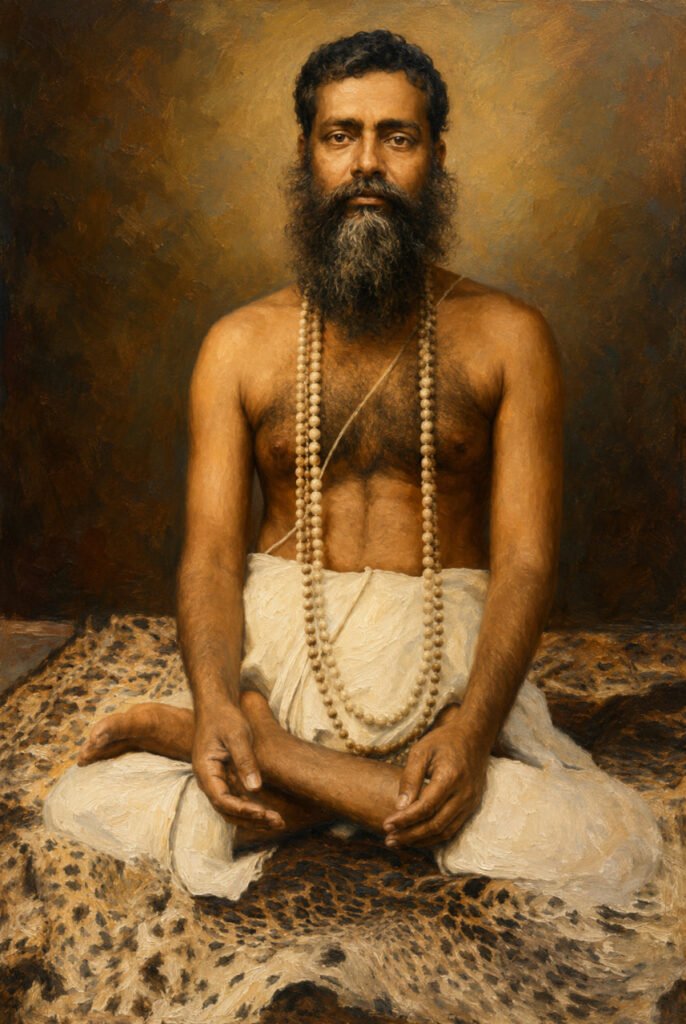
Maharishi Mahatapa sometimes visits Gyanganj Yogashram and sometimes goes to Manohar-Tirtha to pay homage to his Gurumata, Kshepai Maa, also known as Kshepa-Mai. Kshepai Maa is said to be about 2200 years old, yet she appears like a girl of sixteen. Maharishi Mahatapa remains almost always in a deep trance-like state and speaks very little.
Among the principal disciples of Maharishi Mahatapa are Swami Bhriguram Paramahansa, also called Vriguraj Paramahansa, Swami Nimanand Paramahansa, Swami Shyamanand Paramahansa, Swami Gyananand Paramahansa, and Swami Abhayanand Paramahansa. Many other Paramahansas of Gyanganj are also regarded as disciples of Mahaguru Maharishi Mahatapa.
Swami Bhriguram Paramahansa, also called Vriguraj Paramahansa, is regarded as one of the foremost disciples of Maharishi Mahatapa in the line of Yoga. His age is around eight hundred years old. His complexion is like the rising sun. He is the head of the Yoga faculty in Gyanganj, and Swami Vishuddhanand Paramahansa received his direct Yoga training from him.
Swami Bhriguram Paramahansa is also described as the chief administrator of the monasteries under the jurisdiction of Raj-Rajeshwari Devi. His responsibilities include the upkeep of the monasteries, maintenance of order, discipline, inspection, supervision, and the conducting of examinations. It is said that the heartfelt prayer-waves of distressed souls reach his ears immediately, and that he can instantly appear before such souls in human form. He is also said to have unobstructed access to the innermost mind of disciples.
Swami Bhriguram’s mode of travel is described as flying through space, with his feet not touching the ground. He is considered the only Yogi on earth capable of reaching Surya-loka. His body is said to be no longer composed of the five material elements or the six koshas, such as Pranamaya and Gyanamaya, but to have become a supernatural divine body.
Swami Nimanand Paramahansa, also called Nemanand Paramahansa, is the great Siddha Yogi who detected the hidden spiritual greatness in young Bholanath, who later became Swami Vishuddhanand Paramahansa. When Bholanath had lost all hope of life due to the poison of a mad-dog bite and had gone to the Ganga near Hooghly to drown himself, Swami Nimanand saved his life. Two years later, when Bholanath and Haripada traveled from Burdwan to Dacca and expressed their desire to become Yogis, Swami Nimanand took them toward Gyanganj.
Swami Vishuddhanand later said that by the yogic route it took about one hour to reach Vindhyachal in Uttar Pradesh from Burdwan in West Bengal. Swami Nimanand is counted among the foremost disciples of Maharishi Mahatapa and is regarded as a realized Yogi endowed with supernatural powers. He is also described as the Guru of Param Poojya Mahatapsvi Shri Kumarswamiji. His appearance is said to be radiant, with skin like a snow-covered mountain, shining intensely as though oil had been poured over snow.
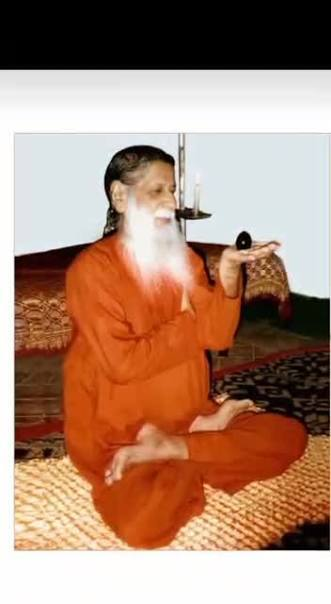
Out of all the disciples of Mahatapa ji, Paramhamsa Bhriguram is the most accomplished one, who is more than 500 years old, he is in-charge of all the Mathas(मठ). He always glides 72 fingers above the Earth surface. His speed is very fast. 15 kalas of Shodash Kalas are established in Gyanganj. By 15 kalas(कला) of Gyanganj, Bhriguram Vishvaguru has been created. Mahatapa Baba is established on 3/4 Kalas and balance 1/4 Kala was responsible for the advent of Vishudhanand. He imparts yogic knowledge, while Vigyan (Super Science) is taught by Paramhamsa Shyamanand. There is a plane in Gyan ganj which has been developed with knowledge of super science, which emits light like Moon at night. Gyanganj is the residence of Swami Abhayanand. He is like Maheshwar. Sometime Neemanand Paramhamsa and Umanand Paramhamsa also come to our Earthly realm.
Above Gyanganj is another realm called Bhargavpuri, which is a place of bhog. This has been created by the power of Parmahamsa Bhriguram ji. Till realm of death is not won over, till Akshand Mahayog is not made a reality, till then for the travelers of this path after leaving their bodies, they will be staying in this realm safely to continue their spiritual practices. Generally, people after death as per their karmas go to higher or lower realms after which the cycle of life and death goes on. A soul is lost in this great cycle of life and death and it becomes very difficult to locate it. For the followers of the path of Akhand Mahayog, this realm of Bhargavpuri has been developed. The sadhaks of this path, after death will come into this realm and will continues their sadhana in subtle body after death to finish their pending sadhana. Heaven etc. are places of enjoyment, after completion of the good deeds one is thrown back into the cycle of life and death. Bhargavpuri is Karm sthan(कर्मस्थान) or place of action. There is no question of falling down from there as it does not come under Brhma(ब्रह्मा) but only the yogis of Gayanganj. There also souls move forward on the path of Akhand Mahayog.
Swami Shyamanand Paramahansa is another great disciple of Maharishi Mahatapa. He excelled in the knowledge of Natural Sciences under the guidance of the Maharishi and became the head of the Science faculty in Gyanganj Yogashram. He taught Solar Science, Astronomy, Astrology, Etherial Science, Lunar Science, and other subtle sciences. Among all these, Solar Science, or Surya-Vijnan, is regarded as the supreme and foundational science.
Swami Vishuddhanand learned Surya-Vijnan thoroughly under Swami Shyamanand Paramahansa. He was the first to reveal some knowledge of this science to the outer world. Before him, it is said that the world had no real knowledge of Surya-Vijnan. This science is closely connected with Yoga, and only one who is fully accomplished in Yoga can attain complete knowledge of it. Swami Shyamanand is also said to be over five hundred years old. Dhabalananda Paramahansa Ji is described as a disciple of Swami Shyamanand Paramahansa Ji.
Swami Gyananand Paramahansa is the latest restorer, and preserver of Gyanganj Ashram. The ancient place was formerly known as Indrabhavan. After renovating this ancient place, he took charge of its management and preservation. The ashram was restored by him around 1225 AD.
Swami Gyananand Paramahansa had already attained the state of Paramahansa before restoring Indrabhavan.
Swami Abhayanand Paramahansa, also known as Paramhansa Abhayanand Ji, is described as a Guru-bandhu, or brother-disciple, of Paramhansa Vishuddhanand Ji. He belongs to Jnanganj Ashram and is a disciple of Maha Tapa Ji Maharaj. He is said to be in a deep state of samadhi, undergoing spiritual penance.
A remarkable account is connected with Swami Abhayanand Ji in Bardhaman, West Bengal, before Indian independence. One evening, a monk was seen sitting beside a lake called Shyam Sayer in Burdwan. The local people noticed that whenever the Yogi raised his hand toward the lake, the water of the lake rose automatically and touched his hand. The people were astonished and made many requests for him to speak, but the monk neither spoke nor gave any sign.
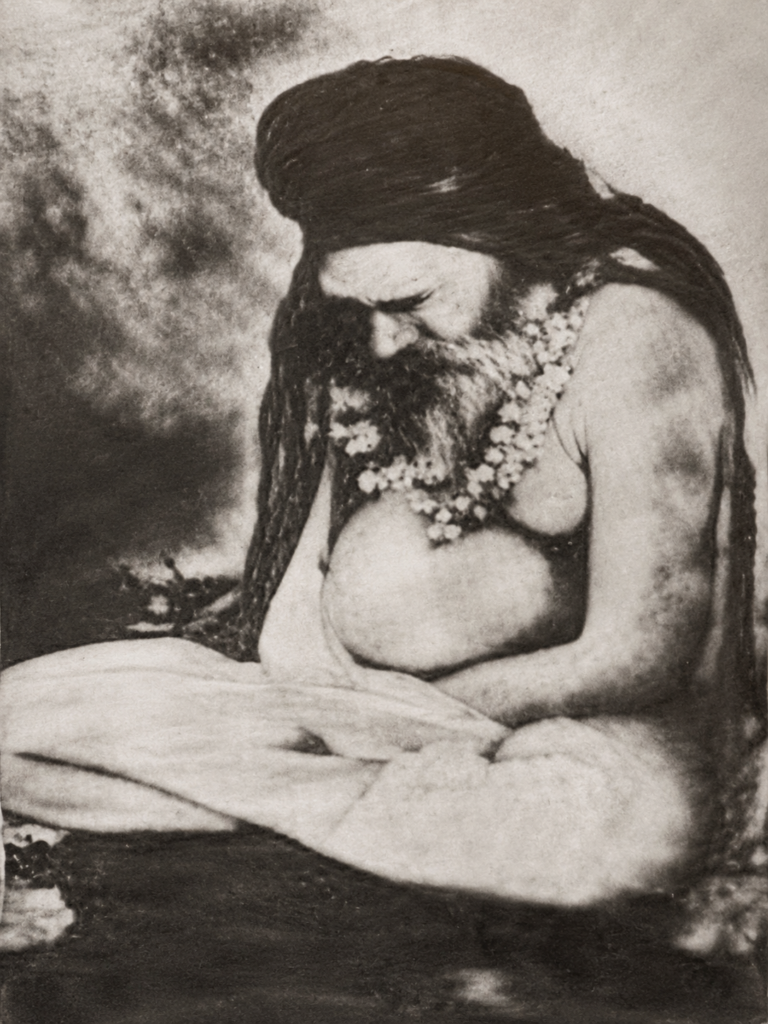
When people followed the monk, they saw him board a slow-moving train at Burdwan Railway Station. Within a minute, the Yogi vanished. The people remained amazed by the incident. That immortal Yogi was said to be Swami Abhayanand Ji of Gyanganj, and he is also described as the only monk of Gyanganj whose photograph exists.
The book ‘Ghost Land’ also refers to seats of unknown Rishis of divine powers hanging in air and secret gatherings near Mumbai’s Elephenta Cave’s Kailas. The faces of these Rishis are not visible. It shows that there has been a long tradition of keeping the identity of Rishis with divine power anonymous.
The Indians, of course, does not have a monopoly on Gyanganj. People from other parts of the world live there, including many Tibetan lamas and many even from Greece.
“Many esoteric yoga secrets were explained to him by Himalayan Masters like Languria Baba, who, living in an invisible form at Jnanganj selects eligible aspirants and imparts to them many yogic powers.”
“Barphani Baba himself told some of the Ashramites that Puleria Baba taught this rejuvenation technique to him, to Ganesh Lama, to Dr. Rambhaji and to many others including some Godmen who are now residing in Australia.”
“Sri Baba is an adept in Lama Vidya, travelling in air with the physical body, and Khanda Vidya, separating parts of body and again connecting them.”
“It is only the merit accrued from many previous lives, combined with a highly evolved Guru’s grace that allows one access to this Ashram located in breathtakingly beautiful surroundings.”
“The towering mountains all round it, the pure air fragrant with incense, camphor and the scent of rare medicinal plants like ‘Gulebakavali’ have rightly made it the centre for Baba’s many instructional courses in such incredible subjects as coming out of the body to enter a dead person’s body, learning the secret of eternal youth, mastering the ability for astral travel, the technique of walking across water, the science of awakening the kundalini and so on.
DIVINE MOTHERS AT GYANGANJ
Gyanganj is not patriarchal and values males as much as females. In fact, the Tantrik system in Gyanganj venerates the holy mother force or Shakti. Divine mothers are an integral part of Gyangangj ashram. Their age ranges between 200-800 years.
SOME NAMES OF BHAIRAVI MOTHER’S
UMA BHAIRAVI
SHYAMA BAIRAVI
TRIPURA BHAIRAVI
GYAN BHAIRAVI
ANANDA BHAIRAVI
BIMAMATI BHIRAVI
KATHI BHIRAVI
UMA BAIRAVI HAS LONG MATTED HAIR. SHE HAS BIG RED SANDAL SPOT ON HER FOREHEAD. IN ONE HAND SHE HOLDS A TRISUL. Uma Bhairavi is head of medical unit of Jnanganj Ashram. Uma Bhairavi is the Guru Maa of many saints amongst whom Vishuddhanand Paramhamsa is the most known.There is not much recorded information found on Uma Bhairavi or Gyanganj,Her reference is mentioned in few places like books on Shri Vishuddhanand Paramhamsa, which are again very rare.Maa Uma Bhairavi as a mystic from Gyanganj preferred to remain away from the public eye in her spiritual solitude.
These Bhairavis are not what has been explained in about Bhairavis in Kaul marg or Vamachar. These Bharavis are full motherly instinct.
Uma Ma, Shyama Ma and Adi Ma are established in a sequence, Adi Ma being the highest. Uma Ma is Kumari-form while Shyama Ma’s area comes between both Uma Ma and Adi Ma. Paramhamsa Vishudhanand ji met all three of them.
Their work is to guard the sadhaks and to evaluate their progress. Adi Ma should be known as primordial power while Shyama Ma is Karm(Action) Shakti and Uma Ma is Gyan (Knowledge) Shakti. From Uma sound of Om continuously flows. This sound of Om travelling to all the 14 realms comes to our realm of death too but since there no takers of it, it returns to Gyanganj again.
yoga kriyas and system and gyanganj
stages of spiritual evolution at gyanganj
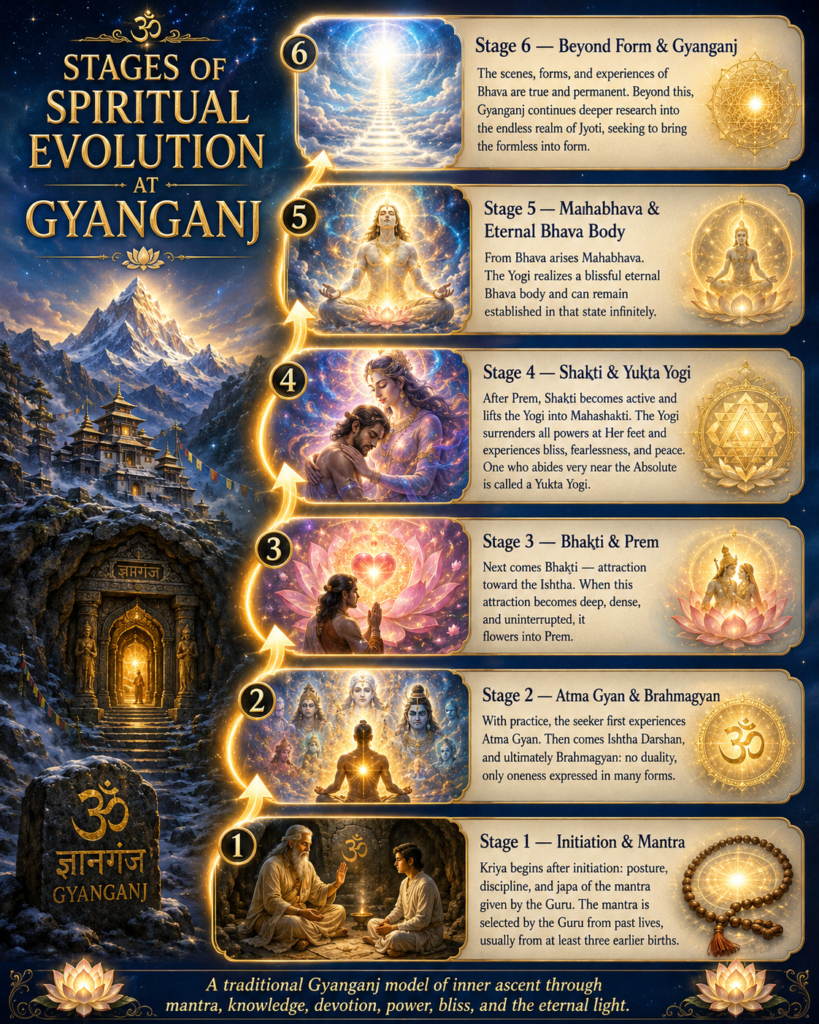
Stage 1 — Initiation & Mantra
Kriya begins after initiation, meaning posture along with ‘Japa’ or chanting the mantra repeatedly as advised by the Guru or spiritual teacher. Mantra is selected by Guru from past lives, usually from a minimum of three earlier births.
Stage 2 — Atma Gyan & Brahmagyan
This may be different or the same for different persons. Once any person starts practicing, they experience ‘Atma Gyan’ as the first step of their Sadhana. After that experience, they will see ‘Ishtha Darsan’ and ultimately ‘Brahmagyan’, which means no duality, only oneness in many forms.
Stage 3 — Bhakti & Prem
The next step is ‘Bhakti’, meaning feeling an attraction towards Ishtha. When attraction becomes very dense and uninterrupted, it is called the ‘Prem’ level.
Stage 4 — Shakti & Yukta Yogi
After attaining the ‘Prem’ level, the Kriya of Shakti starts functioning, becoming active and taking the Yogi onto the lap of Mahashakti. The Yogi will surrender all their powers at the feet of Mahashakti and will experience bliss, fearlessness, and continuous peace of mind. Next, at that time, the Yogi experiences themselves as a vast personality and automatically moves towards the Absolute. Yogis who are very near to the Absolute and maintain that state as long as they can are called ‘Yukta Yogis’. These Yukta Yogis’ levels vary as near, nearer, and nearest to the Absolute.
Stage 5 — Mahabhava & Eternal Bhava Body
The nearest Yogi to the Absolute is superior to the nearer Yogi in spiritual attainment. Dipping in the Absolute can sometimes be difficult for the individual Yogi’s mind. After that, the Yogi moves towards experiencing ‘Maha Bhava Moyi Mahashakti’. The ‘Bhava’ ultimately brings the Yogi to ‘Mahabhava’. Then, the Yogi realizes a permanent ‘Blissful Eternal or Permanent Bhava Body’ and can stay in that state infinitely.
Stage 6 — Beyond Form & Gyanganj
This Bhava is true, and the various scenes, forms, etc., whatever are experienced, are true and still permanent. After that, more research is going on by Gyanganj to penetrate the permanent endless Jyoti area to give formless to form.
the 3 levels of spiritual penance at gyaganj
To become a Paramhansa (Illuminated Soul) at Gyaga nj is no easy work, the process in total takes an approximate of 25 years, which is divided into 3 levels (hello Masons!)
1. Brahmachari Stage (Celibate / Student Phase) — Approximately 12 Years
This is the foundational and longest phase.
- Strict celibacy and total dedication to spiritual discipline.
- Mastery of Ashtanga Yoga (eight limbs), Kundalini awakening through Sushumna Nadi, and initial siddhis (such as Anima and Mahima).
- Intensive practice of yogasanas, pranayama, kriyas (including Nabhi Dhauti), and purification of body and mind.
- Goal: Build a pure, strong foundation and overcome worldly attachments.
2. Sannyasi / Dandi Swami Stage (Renunciate / Application Phase) — Several Years
After completing the Brahmachari period, the sadhak takes formal monastic vows.
- Lives as a Dandi Swami (with the symbolic staff).
- Advanced kriyas, deeper breath control, and study of higher sciences (Yoga-Jyotish and Surya Vigyan).
- Practical application of yoga in daily life while maintaining strict discipline.
- Goal: Integrate realization, overcome mental obstacles, and prepare for independent action.
3. Tirtha Swami Stage (Pilgrim / Testing Phase) — Variable Period
The final testing ground before full illumination.
- Extensive pilgrimage across holy places, mountains, and caves.
- Living in solitude, facing real-world challenges while maintaining inner equanimity.
- Deepening of realization through travel, austerity, and service.
- Goal: Complete detachment and proof of mastery in the outer world.
Final Initiation: Paramahansa Title
After successfully completing the three phases and passing the supreme test (such as the Shivling test in the Lotus Chakra), the Guru (often in the presence of Mahatapa) confers the title of Paramahansa.
This marks full mastery over duality and nature, readiness for cosmic service, and the ability to work from Gyanganj’s higher planes.
Total Duration: Approximately 20–25+ years of unbroken, intense sadhana.
This is the generalized Gyanganj system:
Brahmachari → Sannyasi → Pilgrim → Paramahansa
Would you like me to expand any phase or turn this into a full radio script?
the stages of siddha or mastery at gyanganj
1. Siddhi – Mastery over Nature & Vision of the Divine (Duality)
This is the first major stage. Through stern discipline and sadhana, the yogi awakens the eight classic powers (Ashta Siddhis):
- Anima – Becoming as small as an atom
- Garima – Becoming infinitely heavy
- Mahima – Becoming infinitely large
- Laghima – Becoming almost weightless (levitation)
- Ishitva – Lordship over creation
- Vashitva – Control over others
- Prapti – Obtaining anything desired
- Kamyatva (or Prakamya) – Fulfilling all wishes
These powers give the yogi mastery over the forces of nature. However, the true yogi does not use them for display or personal gain. Instead, they are treated as steps of ascent.
When these powers mature, proper Siddhi dawns: the yogi gains the direct vision of the Divine Beloved in whatever form he adores (Krishna, Shiva, Devi, etc.). This is still a stage of duality — the devotee sees God as separate, yet feels a profound intimate connection across the vastness of existence.
2. Mahasiddhi – The State of Non-Duality
This is a higher realization. The yogi moves beyond duality and experiences oneness with the Supreme.
He realizes: “I am That. God and I are one.”
This is the state of Mahasiddhi. Those who worship the formless Light of Brahman (Brahmajyoti) especially reach this stage. In Gyanganj, through meditation on the radiance of the Supreme Light, the yogi transcends birth and death. He enters the communion of all perfected beings, linked by waves of pure thought. The individual soul merges into the universal consciousness while still maintaining awareness for cosmic service.
3. Atisiddhi – The Supreme Culmination of All Powers
Atisiddhi is the highest culmination of all siddhis and powers. It represents the peak of perfected ability while still functioning in the relative world.
At this stage, the yogi has complete command over all previous powers and has gone far beyond them. He operates with supreme mastery for the welfare of the cosmos. Very few reach this exalted level. It is the stage where all extraordinary abilities become effortless and fully aligned with divine will.
The Final Stage: Paramsiddhi – Nirvana
Beyond Atisiddhi lies Paramsiddhi — the final merging of the luminous self into the formless Absolute.
All works are ended. The yogi enters Nirvana — complete liberation, where individuality dissolves entirely into the Supreme. This is the ultimate goal, the end of the journey.
GYANGANJ PHILOSOPHY
Ganganj Yogis believe in ‘Adyaita Tatwa’, meaning oneness where nothing exists other than one. They believe that any human cannot be equivalent to God. They believe in “Chetan Samadhi,” which denotes the union of Jib Atma with Paramatma in a full external physical sense, which is beyond the state of “Nirbikalpa Samadhi.” They also believe in “Mahashakti,” the supreme power beyond inert Brahma, which knows and is responsible for the entire game going on in the world and in the whole creation.
They have divided Maya into three types: Worldly Maya, Mahamaya, and Yog Maya. They always keep themselves in Yog Maya state to enjoy and get the flavor and taste of the whole game of creation in the form of “Lila.” Therefore, they adopt “Pora Gyan” or “Pora Shakti,” “Pora Bhakti,” and “Pora Kriya” or “Pora Karma” or “Para Yoga” after attaining Adyaita Tatha as per an individual’s taste. Also, they believe that there is no end to this process of adopting “Para Principles” in the spiritual field.
Amazing super-sciences (vigyans) and resources at gyanganj
GYANGANJ philosophy believes both in materialistic research as well as spiritual research, both aims to make an individual reach higher level consciousness. Each scientific system has many departments and each department has separate teachers. Most of the teachers are hundreds of years old, though some of them are thousands of years old also. They are able to stay in their spiritual bodies which appear like a mass of bright light ; while their physical and subtle bodies remain separate. The main deity worshipped in Siddha Vigyan Ashram is the great “Parashakti” also known as “Maha Tripur Sundari” or “Maha Vidya Shodashi” , the third great knowledge of Hindu Pantheon
Gyangangj’s Science department comprises of:
Core Sciences from Gyanganj / Siddhashram Tradition
- Surya Vigyan (Solar Science): Mastery of solar rays to manipulate elements in matter — transform one substance into another (e.g., leaves into flowers, cotton into wood/stone), create or dissolve forms, and draw vital life force. It is considered the foundational and highest science, gateway to all others. The Sun is the source of creation, sustenance, and dissolution.
- Chandra Vigyan (Lunar Science): Science of the Moon for mastery over minds and mental states. It influences thoughts, emotions, and subtle energies. It also aids materialization at night by drawing solar force through moonlight.
- Vayu Vigyan (Air Science): Governs birth and death — summons souls into bodies or withdraws them. Allows the yogi to dissolve the gross body into subtle form, appear in multiple places simultaneously, and travel vast distances instantly.
- Nakshatra Vigyan (Celestial / Star Science): Mastery of planetary and stellar influences. Allows the perfected yogi to perceive the destiny of individuals, nations, and the flow of karma, and to dispense or adjust karmic outcomes at the ordained time.
- Jala Vigyan (Water Science): Complete command over water in all forms — walking on water, floating, diving to ocean depths, or transforming the body into water. Maintains the global water cycle and can unleash or control floods during dissolution periods.
- Bhumi Vigyan (Earth Science): Sustains the fertility and stability of the Earth. Yogis strengthen or withdraw support from the planet, influencing earthquakes, fertility, and natural balance.
Additional Sciences Mentioned / Related in Gyanganj Tradition
- Akash Vigyan (Etherial / Space Science): Not always listed separately but implied as the subtle medium connecting all sciences. It relates to the all-pervading ether (Akasha) through which thought waves, mantras, and higher energies operate. In broader yogic lore connected to Gyanganj, it enables omnipresence and access to universal knowledge.
- Shabd Vigyan (Word / Sound Science): Mastery over the power of sound and mantras. Every science is activated through specific mantras that awaken primal forces of nature.
- Nada Vigyan (Vibration / Sound Science): Closely related to Shabd. Deals with cosmic vibrations (Nada-Brahma), inner sounds, and how vibrational energy creates and sustains reality. The humming or anahata nada heard in Gyanganj is part of this.
- Sangeet Vigyan (Music Science): Extension of Nada and Shabd Vigyan. Uses specific ragas, tones, and musical vibrations for healing, altering states of consciousness, and influencing subtle forces.
- Kshan Vigyan (Temporal Science): Science of time and moments. Understanding and working with the flow of time (Kshana), possibly including transcending ordinary time or acting at precise karmic moments.
- Chikitsa Vigyan (Medical / Healing Science): Yogic medicine and healing using the above sciences — rejuvenation (Kayakalpa), spiritual healing, and balancing physical/subtle bodies.
Other Sciences Referenced in Gyanganj / Himalayan Accounts
- Swar Vigyan (Breath Science): Science of nasal breath flow (Surya Swar / Chandra Swar) and its influence on energy, actions, health, and timing of activities. Highly practical for daily life and sadhana.
- Dev Vigyan or sciences related to divine beings (sometimes listed among the 16 areas in Gyanganj).
These sciences are not “material” in the modern sense but subtle yogic disciplines practiced only by highly advanced siddhas in Gyanganj. They are used selflessly for loka-kalyana (welfare of the world) and maintaining cosmic order under divine will. Mastery requires high levels of siddhi (Mahasiddhi or Atisiddhi) and is transmitted directly from guru to disciple in the hidden realm.
Shri Bholnath (Vishudhanand) received his training in Yog and Vigyan from Paramhan Bhriguramji, Paramhans Shyamanandji, Shri Neemanand Paramhans in Gyanganj. Disciples have to sit before Harihar Banlinga (oval shaped lingam that combines shiva with hari) in Gyanganj for their Sadhana.
GYANGANJ’S YOGIC division is headed by YogiRaj Bhriguram Paramahansa. This division has developed various DHOUTI KRIYAS. Practicing NAVI DHOUTI helps a Yogi to fly in the sky with the same body to any LOKAS. Bhriguram Paramahansa ji is the only Yogi who can travel to SURYA (Sun) lok with his own body. Most Senior YOGI’s in Gyangangj do not eat or drink anything and only breathe a few times in a day through a KRIYA called KUMBHAK.
AMAZING TECHNOLOGY AND KNOWELDGE AT GYANGANJ
Gyangangj has developed its own VIMAN (Aeroplane). Different types of vimanas serve various roles. For example, the “Shakti Vimana” … the “Surya Vimana” …
Gyanganj holds within its boundaries ancient libraries, scrolls, and artifacts that date back to the beginning of known history and beyond, dating back to the ancient Vedic civilization, 15000 years old. Meditation, martial arts, mind sciences, and advanced disciplines are combined to train young minds in understanding both the scientific and mystical aspects of their world. This education is holistic, focusing on balancing knowledge of the outer world with inner peace and self-realization.
The Indrabhavan also stores the divine Astra-Shastra arms of the Mahabharata days. Outside the monastery campus there is a giant Shiva-Lingam, that is fluorescent and dynamic, it has magical properties. At the Gyanganj Aashram the crystal Shivlings are being made with the help of solar science and the seven rays coming from the sun. These weapons include the “Varunastra” (a weapon of water), the “Agneyastra” (a weapon of fire), and the “Brahmastra” (an ultimate energy weapon), each capable of targeting specific energies or elements. The weapons are stored in the Sacred Vault. Gyannganj’s weapon arsenal is protected by a group known as the “Shastra Rakshaks,” guardians dedicated to preserving the sanctity of these divine tools.
Over centuries, Gyanganj’s scholars have discovered and studied relics from Mahabharata-era battlefields, learning to reverse-engineer their mechanisms. For instance, the “Dronacharya Bow,” modeled after the legendary archer Dronacharya’s weapon…Protective shields, known as “Vayustha,” are constructed using sacred geometric patterns…For example, before embarking on a mission, warriors participate in a ritual known as “Karuna Yagna,” where they meditate and channel compassionate energy into their vimanas. Gyanganj’s technology is designed to respond to the consciousness of its operator. This means that those with negative intentions or disturbed minds cannot operate or activate these machines., Gyanganj’s citizens gather for a collective meditation known as “Samagra Karuna,” in which they focus their collective energy on protecting the city.
Actually if the developments in present day science are to be compared with the level of developments in Gyanganj, they stand nowhere. Most of the science is involved in three dimensional worlds but in Gyanganj the yogis are working on the fourth dimension as well. Today’s science has learnt the art of creating energy from an atom but they don’t know how to create atom from that energy
surya vigyan or solar science most important super-science
PURPOSE OF SURYA VIGYAN
To enhance the well-being of humanity worldwide through creation, innovative solutions, and rectification.
PURPOSE OF SURYA VIGYAN
To enhance the well-being of humanity worldwide through creation, innovative solutions, and rectification.
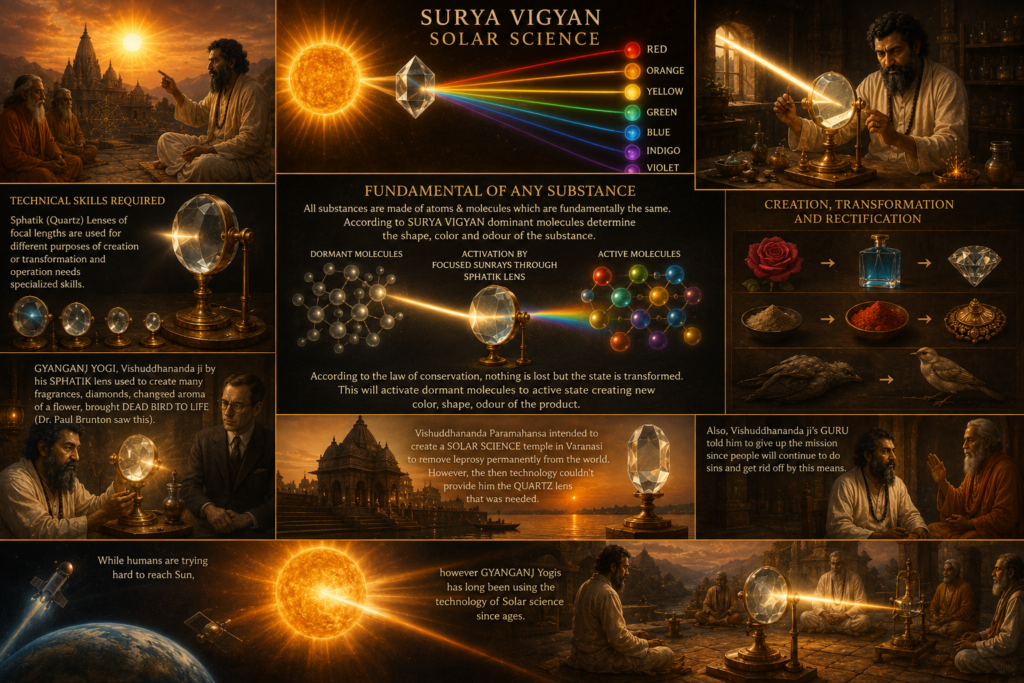
Gyangangj Yogi uses permutation and combination of these colors with some lens, applying sophisticated skill and knowledge to transform one product to another or to create any new product.
TECHNICAL SKILLS REQUIRED
Sphatik (Quartz) Lenses of focal lengths are used for different purposes of creation or transformation and operation needs specialized skills.
FUNDAMENTAL OF ANY SUBSTANCE
According to Surya-Vijnan there are 360 rays of the sun which go to form the whole creation of the Universe and are then converted into 7 main colors. Baba converted cotton wool, flowers and leaves into stones, wood, etc. by the incidence of appropriate rays of the Sun. He demonstrated practically how minute particles of ingredients of various objects could be dispersed or assembled and destroyed or created through the proces of Surya-Vijnan.
All substances are made of atoms & molecules which are fundementally the same. According to SURYA VIGYAN dominant molecules determine the shape, color and odour of the substance.
SURYA VIGYAN says the dormant molecules are present in the product but are inactive. Gyanganj Yogi, SPIRITUAL SCIENTIST, will only make the dormant molecules active as per need.
According to the law of conservation, nothing is lost but the state is transformed. The YOGI with help of SPHTIK lense will focus & combine SUNRAYS. This will activate dormant molecules to active state creating new color, shape, odour of the product.
GYANGANJ YOGI, Vishuddhananda ji by his SPHATIK lens used to create many fragrances, diamonds, changed aroma of a flower, brought DEAD BIRD TO LIFE (Dr. Paul Brunton saw this).
Vishuddhananda Paramahansa intended to create a SOLAR SCIENCE temple in Varanasi to remove leprosy permanently from the world. However, the then technology couldn’t provide him the QUATZ lens that was needed.
Also, Vishuddhananda ji’s GURU told him to give up the mission since people will continue to do sins and get rid off by this means.
While humans are trying hard to reach Sun, however GYANGANJ Yogis has long been using the technology of Solar science since ages.
While humans are trying hard to reach Sun, however GYANGANJ Yogis has long been using the technology of Solar science since ages.
According to Mahamahopadhyay Pandit Gopinath Kaviraj, the professor of physics at Varanasi’s Queens College, Raibahadur Abhaycharan Sanyal, requested Gundhi Baba to convert a piece of wood into granite in the laboratory. Swami Vishudhanand reached the laboratory with his crystal glass. Sunrays passing through the glass started to burn the wood which started to turn red and transformed into granite. From his Gyanganj residence he used to send material for the mothers of Gyanganj via the ‘sky route’. After prayers and archana at Shakti Peeth Kamakhya Devi, Swami Vishudhanand expressed a desire that he should be fed by the Kumari who had disappeared after meals had been prepared. The elderly at Kamakhya started to laugh in derision. Suddenly, Kumari appeared at the time fixed for his meals. After the display of Surya Vigyan and the extraordinary powers of Yog, Swami Vishudhanand liked to see the Kumaris, representatives of Mahashakti, being served meals. He considered it as a secret atonement for unauthorised exhibition of Vibhuti.
Baba stayed in Gyanganj Ashram for 12 years. Surya i.e., Sun or Savita means ‘source of creation’. As a result of his adherence to the strict rules of the Brahmacharya period, Bholanath had freed himself from the influence of ego and had also developed the spirit of surrender to the will of the Supreme Power.
Matter is indestructible
Shri Baba demonstrated practically that matter is indestructible.
1st Instance
He asked Shri Gopinath to write something on a piece of paper, burn it and pulverize the ashes by his hands. Thereafter he resurrected from its ashes that very same paper with the sentences written on it by Gopinath.
2nd Instance
Another day, Baba had a pail full of milk thrown into the river Ganga in Varanasi at one Ghat. After a couple of days he reclaimed that pail-full of milk from the Ganga at another ghat of Varanasi.
3rd Instance
Even if a person passes away from the world of curse (Mrityulok) to heaven (Brahmalok), a yogi can bring him back in the world, through his yogic power. For example, Baba brought back his dead father in bodily into this world at Bondul at the earnest request of his elder brother Shri Bhutnath. This incident has been described later in chapter 6 of this book. The above proved beyond doubt that nothing is ever lost or destroyed in Nature.
jog jyotish – astrology from gyanganj
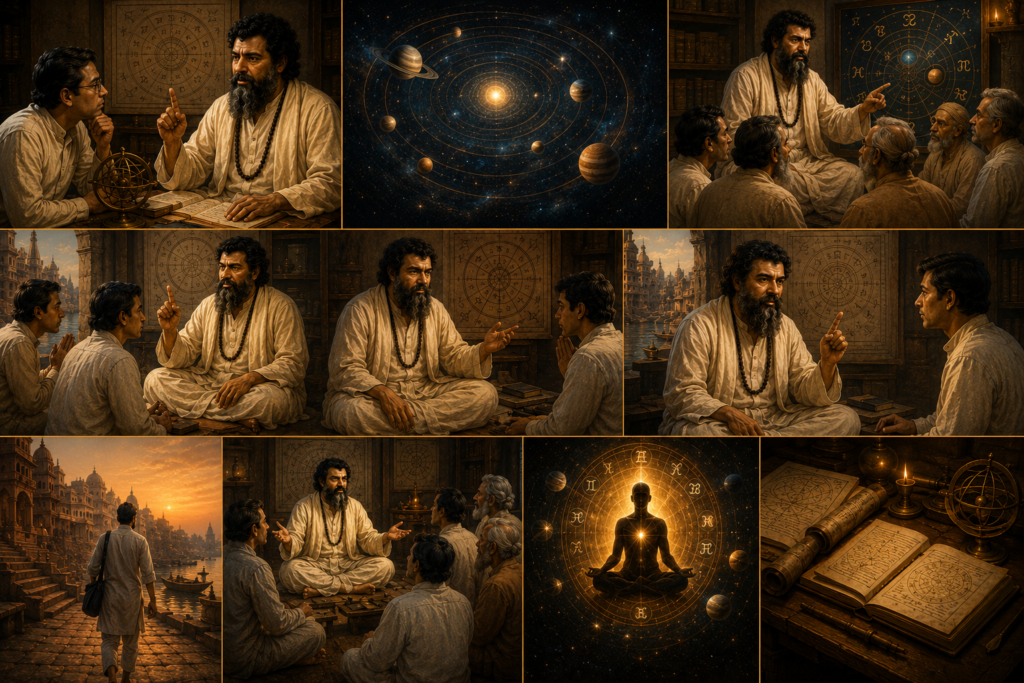
Vishuddhananda Paramhansa Baba was once asked by Sri Gopinath Kaviraj why even yogis cannot make accurate future predictions. Vishuddhananda ji responded that accurate predictions are possible if a yogi can apply “Yog Jyotish.” He explained that any other method of calculation for predictions is erroneous. Gopinath questioned why there is a difference, prompting Vishuddhananda ji to elaborate. Vishuddhananda ji explained that in the universe, there is only one eternal, non-moving, non-oscillating substance. “Yog Jyotish” collects the most basic initial information pattern from that source. All other substances and powers are moving and vibrating, making any basic information collected from a moving platform uncertain. Gopinath pointed out that Vishuddhananda ji had once mentioned errors in “Yog Jyotish.” Vishuddhananda ji clarified that it is not “Yog Jyotish” that is wrong. He explained that the fault lies in the person calculating, who may not have the capability to touch that “Satya” non-moving fixed substance. One day, a disciple asked Vishuddhananda ji if he should go on a journey. Vishuddhananda ji saw no good reason for the disciple to go but left the decision to him. The disciple went away. Soon after, another disciple asked Vishuddhananda ji the same question. Vishuddhananda ji responded differently, advising against the journey due to the disciple’s already concentrated mind and good progress in spiritual tasks. Vishuddhananda ji then explained to those present why his advice differed for the two disciples. The first disciple had an oscillating mind and would benefit from travel. The second disciple had a focused mind and would lose concentration if he traveled. Vishuddhananda ji emphasized that his advice varies based on the individual’s circumstances and needs at the moment. Gopinath asked why Vishuddhananda ji’s statements sometimes change. Vishuddhananda ji explained that whatever he says at a particular time is true for that moment and for the person listening. Everything in the world is different, and his advice is tailored to bring the best result for each person. He illustrated this with an example of two disciples seeking permission to visit holy places, providing different advice to each based on their unique situations and needs.
medical faculty and secret medicines from gyanganj
Prof. Gupta went to sit near Sri Sri Vishuddhananda Paramahansa Ji, a person from outside came and obtained a printed paper from him. When asked about the paper, Gangadhar Dada explained that it was the prescription for Suvarnavasantmalati. Expressing unfamiliarity with the medicine, Prof. Gupta asked, ‘No, never heard of it. What medicine?’
Gangadhar Dada then elaborated, ‘That medicine came to my father from Gyanganj, and it has the ability to cure many diseases.’ Prof. Gupta took the paper and examined the prescription of the medicine. Gangadhar Dada shared, ‘There is one more thing that has given life to my 82-year-old father.’
Upon scanning the content of the paper, Prof Gupta found various medicines and their prices from Gyanganj. They are:
1. Suvarnavasant Asab (Blood Purifier), Price 8 Anas (32 Paisa)
2. Suvarnavasantmalati (All Panacea), Price 7 Anas (28 Paisa)
3. Suvarnamalati Asab (Medicine for Asthma, Cough, Tuberculosis, etc.), Price 8 Anas (32 Paisa)
4. Suvarna Asab (Medicine for Indigestion), Price 8 Anas (32 Paisa)
5. Suvarnashankar Dhurja Botti, Price 2 Ana (8 Paisa)
Paramahansa Vishuddhananda Ji came out and said to Prof Gupta, these medicines are so popular Ayurvedic medicines and you have not heard about these. Surprising! Vishuddhananda Paramahansa Ji emphasized, ‘I have seen the most amazing results of its use, especially that cures breathing problems.’
TO BE CONTINUED…